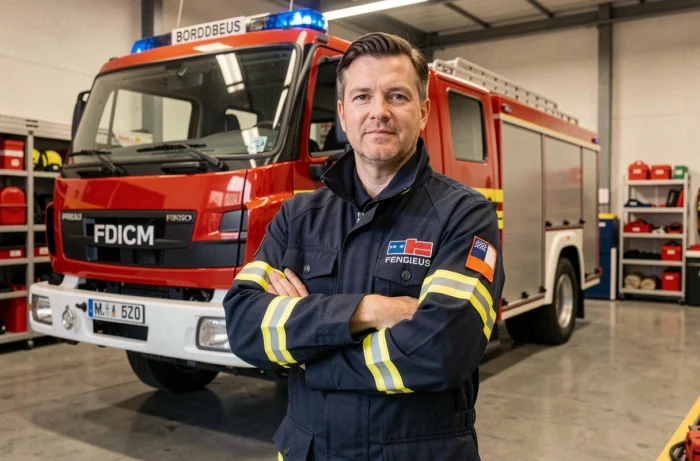
When a volunteer firefighter from Gironde finishes a twelve-hour shift on a fire front, the last thing he checks is the condition of his isolating breathing apparatus. If the filter is out of order, it must be replaced before the next rotation. This type of equipment comes at a cost, and the budgets of departmental unions do not always cover the spikes in consumption related to summer fires. This is where targeted donations come into play.
Consumable equipment and emergency funds: what a donation to the firefighters of Gironde really finances
The departmental unions of firefighters (UDSP) mainly finance consumable equipment and human support: filter cartridges, packs of hemostatic dressings, fire suits to be replaced after prolonged exposure, as well as post-intervention psychological support.
The Union Départementale des Sapeurs-Pompiers de la Gironde, based in Bordeaux, is one of the associations registered to receive contributions directly. Every euro donated arrives without intermediaries, which prevents the typical dilution of large national collections. To support the firefighters of Gironde with a donation, one goes through dedicated platforms that guarantee this traceability.
Donations also finance the families of injured firefighters. The Work of the Pupils of Firefighters takes care of orphans and the beneficiaries of agents who have died or been seriously injured in service. This social aspect remains largely unknown to the general public.

In-kind donation or financial donation: regulatory constraints during fire vigilance periods
In Gironde, the prefecture lowered the forest fire vigilance level from red to orange on August 4, 2026, but strict prohibitions persist in exposed areas. In practical terms, delivering in-kind donations to at-risk areas may be prohibited without prior authorization.
The restrictions cover free access to forest areas, camping, the use of engines or ignition sources outdoors between 2 PM and 10 PM, and even certain forestry work outside DFCI devices. If one wants to bring water, food, or equipment to the teams in the field, it must go through coordinated channels.
Here’s what this means for a donor:
- Food and logistical donations must go through local authorities or the Red Cross, which ensure sorting, storage, and distribution to operational centers
- Proposals for temporary accommodation for victims are centralized by ARS Nouvelle-Aquitaine and the municipalities, not by the fire stations
- Financial donations remain the most effective channel during an active crisis, as they do not mobilize any additional logistics on the firefighters’ side
Spontaneous solidarity is understandable, but feedback from the field shows that uncoordinated initiatives sometimes complicate the work of rescuers.
Volunteer and professional firefighters in Gironde: understanding who we help
Gironde has a significant proportion of volunteer firefighters, meaning citizens who have other jobs and make themselves available for interventions. They do not receive a salary but hourly fees, which are often modest.
When you donate to the UDSP of Gironde, you mainly support this network of volunteers. Professionals, on the other hand, depend on the SDIS (Departmental Fire and Rescue Service), funded by local authorities. The two structures coexist but do not have the same budgets or needs.
A volunteer firefighter mobilized on a forest fire for several days loses his professional income. Departmental associations can provide one-time compensatory aid thanks to donations. Donating to the UDSP directly finances the safety net for volunteers, not the regular operations of the SDIS.
One-time donation or regular donation to the firefighters: what concrete impact
A one-time donation during a crisis responds to urgency. It allows for the purchase of consumables, funds meals for deployed teams, and covers travel expenses for reinforcements from other departments.
A regular donation, on the other hand, has a structural effect. It finances ongoing training for volunteers, maintenance of equipment between seasons, and long-term psychological support.
Testimonials from firefighters mobilized on the fires in Gironde in 2026 converge on one point: the emotional shock post-intervention is underestimated.
A monthly donation, even modest, allows associations to anticipate these needs instead of reacting in an emergency. The difference between the two approaches:
- One-time donation: immediate response to an identified crisis, visible but limited impact over time
- Regular donation: funding for prevention, training, and psychological support, less visible but structuring impact
- Targeted donation (specific equipment): possible through certain associations, but feedback varies on this point depending on the structures
The classic reflex is to donate when images of fires are shown on loop. Departmental associations, however, need resources all year round. The fire season in Gironde now extends well beyond summer, which lengthens the period of solicitation for teams and equipment.
Supporting the firefighters of Gironde after the headlines, when the cameras have left and volunteers continue to train, is one of the least frequent gestures.