The fashion market is undergoing a transformation that goes beyond the simple game of seasonal collections. Since July 19, 2026, the European ecodesign regulation ESPR (Regulation (EU) 2024/1781) prohibits large companies from destroying unsold new clothing and shoes in the European Union. This measure reshuffles the deck: downgraded stock, end-of-line items, and upcycled pieces now feed into a parallel circuit that changes the way one composes a daily style.
ESPR Regulation and Its Concrete Effects on the Wardrobe
The ban on destroying unsold items currently only applies to large companies. It will be extended to medium-sized enterprises in 2030, while micro and small structures remain exempt. In practice, this means that considerable volumes of new, never-worn clothing are entering the second-hand market, in outlets, or through donation channels.
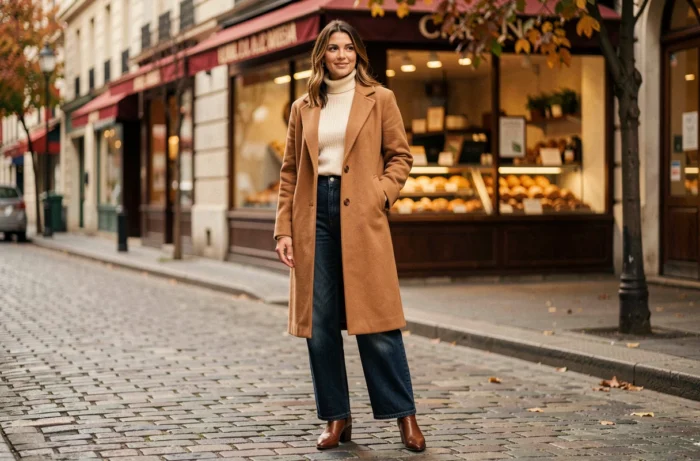
For someone looking to build a personal style, this evolution opens access to quality pieces, sometimes from recent collections, at prices disconnected from the original retail price. The most affected categories are coats, leather shoes, and structured pieces (blazers, suits) whose production is costly and that brands can no longer simply eliminate.
Field reports vary on the quality of this flow: some liquidators offer impeccable pieces, while others sell items with minor manufacturing defects. Checking the finishes (stitches, linings, closures) remains a reflex to maintain, even on downgraded new items. Several specialized blogs document this trend, and the site Les Instants D’Une Blogueuse regularly offers analyses on the underlying movements in current fashion.

Colors and Key Pieces for the Fall-Winter Season
Fall-winter fashion shows direct palettes towards bold tones. Red remains a key color, ranging from deep burgundy to bright vermilion. The combination of red and purple, long considered risky, is making a comeback in wardrobes with a certain insistence.
At the same time, neutral shades (beige, heather gray, brown) continue to serve as a foundation. Everyday style relies on a balance between neutral pieces and a strong color that structures the outfit without overwhelming it.
Key Pieces to Watch This Season
- The red sweater worn over straight raw jeans: a simple combination that works well both in the office and outdoors, provided a sufficiently dense knit is chosen for autumn.
- The reimagined suit with oversized proportions: the long jacket worn open over a plain t-shirt breaks the formal aspect and adapts to daily life.
- The midi dress in fluid material, worn with boots: this silhouette transcends seasons and allows for layering when temperatures drop.
- Rain boots repurposed as a style piece: worn with a skirt or rolled-up pants, they step out of the purely functional realm.
The fall 2026 trend favors generous volumes on the upper body (accentuated shoulders, wide sleeves) paired with a more fitted bottom. This contrast in proportions provides structure without rigidity.
Second-Hand and Resale: An Underestimated Style Lever
The global fashion resale market has reached approximately $317 billion according to recent estimates. This growth, driven by online platforms, is not limited to an ecological gesture. It transforms the way a look is constructed.
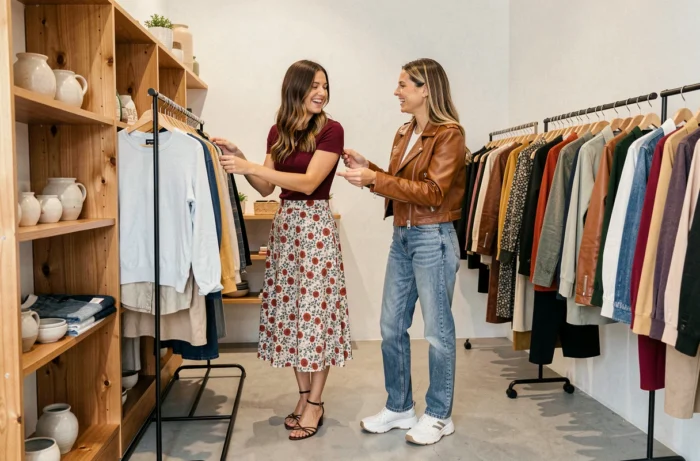
Mixing vintage, luxury second-hand, and contemporary basics creates combinations that no single collection can offer. A designer jacket from the 2000s worn with a current basic pant creates a visual tension that fast-fashion brands cannot replicate.
Field reports vary on one point: the actual durability of vintage pieces heavily depends on their previous storage. A wool coat kept in good conditions can last for decades. An item poorly stored may have invisible weaknesses at the time of purchase. Checking the elasticity of fibers, the condition of buttonholes, and the solidity of colors remains the minimum before any second-hand purchase.
Textile Environmental Labeling: What Changes Starting October 2026
An environmental labeling system for textile products is set to come into effect in France starting October 2026. The goal is to provide consumers with a rating or score reflecting the ecological impact of the garment, from its production to its end of life.
This environmental score could change purchasing criteria just like price or cut. To build a sustainable style daily, this means that traceability information will become accessible directly on the label or via a digital product passport.
The available data does not yet allow for conclusions about the actual impact of this labeling on purchasing behaviors. Feedback from countries that have tested similar systems shows that the effect varies by product categories and age groups.
Adapting Piece Choices to This Framework
Prioritizing low-impact materials (linen, certified organic cotton) for the pieces worn most often (t-shirts, everyday pants) constitutes a first lever. However, for a strong piece worn occasionally (seasonal dress, dressy jacket), the longevity of the garment matters more than the raw environmental score.
- For basics worn three times a week, the quality of the fiber and ease of care take precedence over the current color trend.
- For strong pieces, the cut and construction (lining, reinforcements at seams) determine whether the garment will last several seasons.
- For accessories (bags, belts, shoes), vegetable-tanned leather or recycled materials are gaining ground without compromising aesthetics.
Current fashion is less about choosing a collection than about the ability to recompose a wardrobe from multiple sources: new, downgraded, second-hand, vintage. The regulatory tools coming in (ESPR, environmental labeling) make this approach clearer, but the final criterion remains the same: a piece that lasts over time and integrates with what you already wear is always better than a purchase dictated solely by novelty.