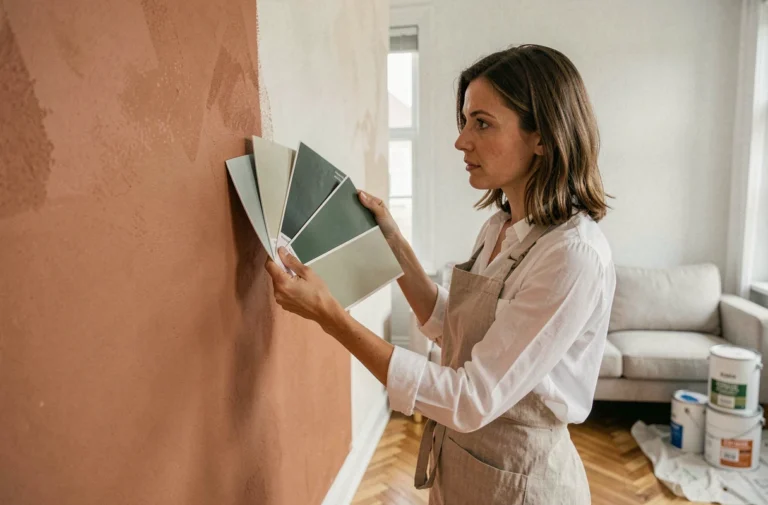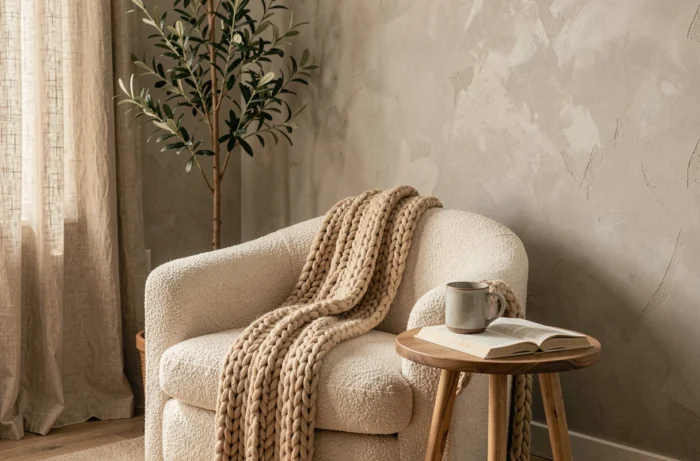
A room can be well-furnished and properly lit without making you want to settle in. What distinguishes a welcoming interior from a simple functional space often comes down to subtle choices: the temperature of the light, the texture of a fabric under your hand, the way a corner of the room isolates from the rest. Transforming your home into a cozy cocoon doesn’t require major renovations, but rather precise attention to a few often-underestimated levers.
Remote Work and Cocooning: Designing a Hybrid Space Without Sacrificing Comfort
The makeshift office on the kitchen table is a thing of the past. With the rise of remote work, the demand for workspaces integrated into the living room or bedroom has significantly increased. The challenge is to maintain the cozy atmosphere of a living space while adding a professional function.
In practical terms, this involves a light wood or oak desk, a chair dressed in a soft fabric rather than technical mesh, and a light visual separation. A wooden slatted screen or a thick linen curtain is enough to define the work corner without partitioning the room. The idea is not to hide the desk, but to blend it into the decor of the interior.
For lighting, an adjustable floor lamp with a warm temperature is a much better choice than a clinical white ceiling light. You work better under lighting that doesn’t sharply contrast with the ambiance of the rest of the room. And in the evening, that same floor lamp becomes a classic cocooning element again.
You will also find home tips from cosyalamaison.fr useful for identifying furniture that fulfills this dual function without visually weighing down a living room.
De-Seasonalizing the Cozy Atmosphere: A Cocoon Suitable for Every Season
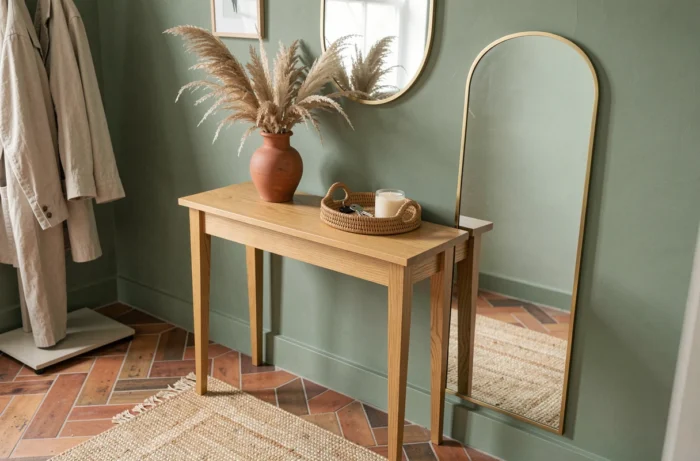
Have you noticed that most cocooning inspirations feature thick wool blankets and lit candles on a November evening? This automatic association between indoor comfort and winter is changing. Cocooning is becoming de-seasonalized, and that’s good news for your home.
In summer, the cocoon atmosphere relies on different materials. Natural linen, woven rattan, and sandy tones replace faux fur and dark velvet. The light remains soft, but we seek visual freshness rather than enveloping darkness.
To adapt your interior to this logic, plan two sets of cushion covers and throws. One winter set (thick textures, deep colors like terracotta or forest green) and one summer set (washed linen, textured cotton, light shades). The change takes half an hour and radically alters the perception of the room.
- Washed linen covers in beige or ecru for the warm months, to be swapped for corduroy in autumn
- Jute rugs in summer, replaced by a long-pile rug as soon as the first chills arrive
- Citrus or verbena scented candles in summer, spices or cedar wood in winter
- Light sheer curtains from May to September, lined with an opaque panel for the rest of the year
This seasonal rotation prevents decorative fatigue and extends the cocoon feeling throughout the year.
Japandi Style: Creating a Soothing Atmosphere Without Overloading the Space
The classic reflex to make a room warm is to accumulate: cushions, objects, frames, plants. The result can veer into clutter and produce the opposite effect of what is sought. The Japandi style proposes a cocoon through subtraction rather than accumulation.
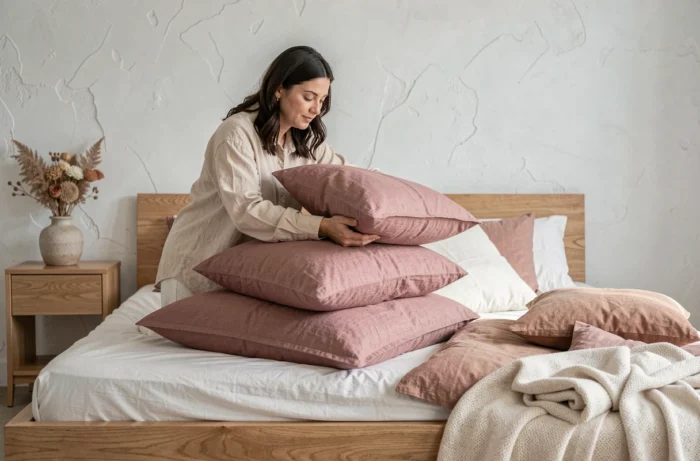
This trend combines Japanese minimalism with Scandinavian warmth. In practice, this results in rooms with few objects, but each chosen with care. A raw wood piece with simple lines, a single textured fabric cushion on a low chair, a ceramic placed on a clear shelf.
The colors remain neutral (off-white, greige, soft gray) with accents of deep green or matte black. Wood is omnipresent, but always in natural shades, never glossy varnished. This palette creates a soothing atmosphere that works in both a living room and a bedroom.
Why this choice rather than a more cluttered style? Because an open space reduces visual fatigue. Your gaze naturally settles, without being constantly solicited. Comfort comes not only from what you touch but also from what your eyes perceive.
Indoor Air Quality: The Invisible Comfort of a True Cocoon
We talk a lot about textures and colors, rarely about what we breathe. An interior can seem perfectly welcoming while being loaded with volatile organic compounds (VOCs) or formaldehyde from new furniture, paints, or floor coverings.
Regular ventilation remains the most effective gesture to maintain healthy air. Opening windows for a few minutes each day, even in winter, refreshes the air without permanently cooling the room. If your home is equipped with a mechanical ventilation system, check that the vents are not obstructed by dust.
In terms of materials, prioritize low-VOC paints and coatings in your decoration projects. Labels exist and are indicated on the cans. For wooden furniture, natural oil finishes emit less than synthetic varnishes.
- Ventilate for at least a few minutes each day, with windows wide open
- Choose paints with a low emission label
- Prefer oil or natural wax finishes on wood
A welcoming cocoon also protects the health of those who live there. Respiratory comfort is part of the cocooning experience, even if it can’t be photographed.
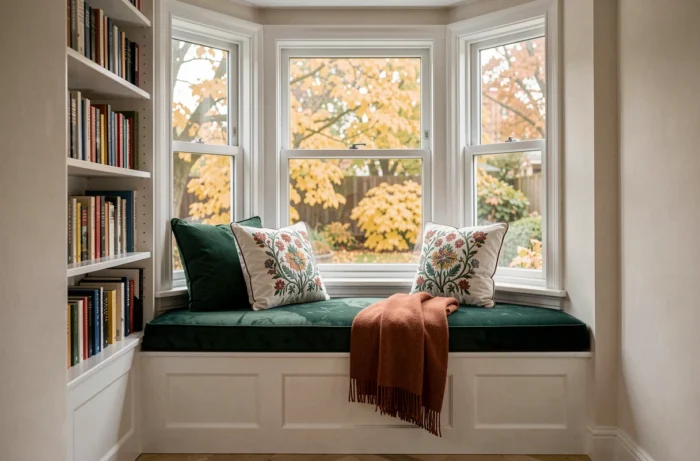
Making your home welcoming is not just about piling cushions on a sofa. The choices that matter are often the least visible: a workspace that doesn’t disrupt the ambiance, seasonally appropriate textiles, understated furniture that allows the room to breathe, and healthy indoor air. It is these combined details that transform a dwelling into a place where one truly wants to stay.