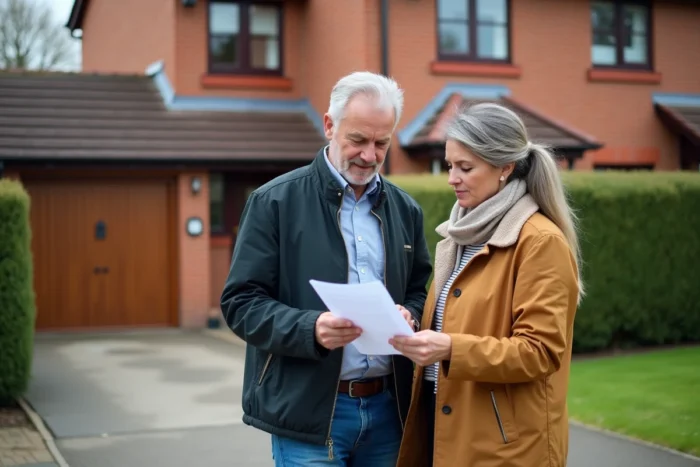
Two houses connected by a shared garage do not present the same risks as a classic standalone house. The shared garage creates a passage point for fire, water, and cracks between two distinct buildings. Choosing a home insurance policy suitable for this configuration means identifying the coverage that addresses this physical link between two properties, and those that remain silent on the subject.
Shared garage wall and disaster propagation: what the contract must cover
The shared garage is not a mere outbuilding. It is a direct contact area between two homes, often separated by a single load-bearing wall. A fire that starts in a neighbor’s garage can spread through the electrical cables running in the common wall or through a faulty expansion joint.
Notarial studies now recommend specifying in the sales agreement the rights of each owner regarding the electrical installations in the shared garage wall. This precaution aims to limit disputes in the event of a disaster of electrical origin, but it also has a direct impact on insurance coverage: if the work did not comply with agreements between neighbors, the insurer may contest the coverage.
Similarly, the absence or degradation of an expansion joint between the two structures promotes the propagation of cracks from one building to another. Building experts indicate that this joint is a point of vigilance during the assessment after a disaster. A multi-risk home insurance policy that does not explicitly mention shared outbuildings leaves ambiguity regarding the distribution of responsibilities.
A detailed guide on the coverage to require in this context is provided by papersimmo on ImmoVite in Bordeaux, focusing on clauses related to shared property.

Home insurance coverage: comparison based on the chosen plan
Not all home insurance contracts treat the garage the same way. Coverage depends on the chosen plan and how the garage is declared (attached outbuilding or independent structure).
| Coverage | Liability only plan | Multi-risk home insurance plan |
|---|---|---|
| Damage caused to the neighbor from the garage | Covered (liability) | Covered |
| Destruction of the garage (fire, explosion) | Not covered | Covered |
| Theft of garage contents | Not covered | Covered (up to a limit) |
| Water damage spread via the shared wall | Not covered for your belongings | Covered |
| Guarding costs after a disaster | Not provided | According to contract (insurance code) |
| Claims from neighbors and third parties | Covered | Covered |
The liability only plan covers only the damage your garage causes to others. However, it does not compensate you for the destruction of your garage or the loss of its contents. For a house shared by the garage, this gap is problematic: a disaster at the neighbor’s can damage your structure without you being compensated if you have not subscribed to a multi-risk policy.
Natural disaster surcharge and clayey area: impact on premium amount
Houses connected by a garage located in areas exposed to clay shrink-swell (RGA) face a double risk. Ground movement weakens the expansion joint and the shared wall, increasing the likelihood of structural cracks transferring from one building to another.
The natural disaster surcharge on home insurance contracts has increased in recent years. This rise directly affects homeowners in RGA areas, who see their premiums increase without necessarily benefiting from enhanced coverage for soil-related issues.
For a shared house, the question becomes more technical: if the cracks originate from the neighbor’s land but propagate through the common garage wall, liability and coverage depend on the assessment. The insurance contract should ideally include a work damage guarantee or a clause covering structural disorders related to the soil, distinct from the standard natural disaster guarantee.
Points to check before signing a quote
- Is the shared garage declared as an outbuilding attached to the dwelling in the contract, or as a separate structure? The answer affects the scope of coverage and the amount of the compensation limit.
- Does the “claims from neighbors and third parties” clause cover disasters originating in the shared wall itself, and not just in the garage strictly speaking?
- Does the contract provide for the costs of guarding the vehicle if the garage becomes unusable after a disaster? The insurance code regulates this issue, but not all contracts include it.
- Does the plan include legal assistance in case of a dispute with the neighbor over the distribution of repairs to the common wall?

Home insurance and shared property: the declaration in the contract changes everything
Most insurers consider the garage as an outbuilding of the dwelling, provided it is located on the same land or attached to the house. For a shared garage, this classification poses no difficulty if the garage is physically connected to your home.
The problem arises when the garage is shared or when the property line runs through the middle of the common wall. In this case, each owner must declare their half of the garage to their own insurer. An incomplete declaration can lead to a refusal of compensation, with the insurer considering that the damaged property has not been accurately described in the contract.
When requesting a quote, always specify the shared configuration. Mention the existence of the common wall, the expansion joint, and any shared networks (electricity, drainage). These elements allow the insurer to adjust the coverage and avoid disputes after a disaster.
The difference between a suitable contract and a generic contract lies in these declaration details. A shared house by the garage poorly described in the contract remains underinsured, regardless of the premium amount paid.