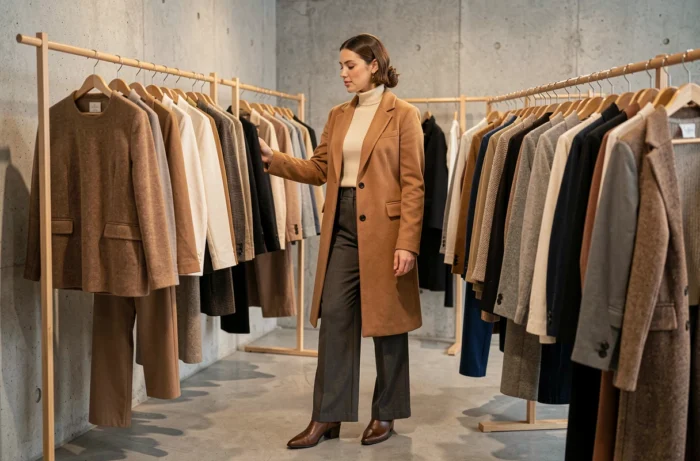
Each new season encourages a fresh look at your closet. The fashion trends for the 2026 season are not just a list of items to buy: they reflect a deeper change in how to curate a wardrobe. With athletic codes, fluid cuts, and European regulatory constraints, the wardrobe is evolving towards more sustainability and uniqueness.
Sporty Codes and Technical Wardrobe: The Fashion Trend That Runways Haven’t Launched
Have you noticed that tracksuits, running sneakers, and technical jackets have been flooding the streets for several months? This movement does not come from the fashion shows. It originated from search data on Pinterest and other platforms, where looks inspired by Formula 1 and athletic-coded outfits are among the rising queries for summer 2026.
This shift changes the logic of the wardrobe. The technical wardrobe becomes a daily style foundation, not just a register reserved for the weekend. A structured jogger can be worn with an open shirt. A pair of running sneakers replaces loafers under wide trousers.
To keep up with the latest fashion on Fashion Pulse, this sporty turn is one of the season’s main themes: it’s less about a homogeneous style and more about a reservoir of pieces to gradually integrate.
The key takeaway: favor sporty pieces with refined finishes (flat seams, breathable materials with a clean drape) rather than low-quality sportswear. The boundary between city wear and active wear is blurring, but the quality of the cut makes all the difference.
Fluid Dress and Wide Trousers: Cuts That Redefine the Silhouette
Two pieces dominate the spring-summer 2026 collections: the long fluid dress and the structured wide trousers. Their common point? They free the body without sacrificing style.
The Long Fluid Dress, a Central Piece of the Summer Wardrobe
Spotted at several houses during the shows in Milan and Paris, the long fluid dress fits into an aesthetic that some call poetcore. It focuses on the movement of the fabric rather than a fitted cut.
In practice, its appeal lies in its versatility. Worn with flat sandals, it’s suitable for everyday wear. Paired with a thin belt and structured accessories, it transitions into evening wear. The season’s colors range from vibrant shades (orange, yellow) to softer tones (olive green, sky blue).
The Structured Wide Trousers, an Alternative to Slim Jeans
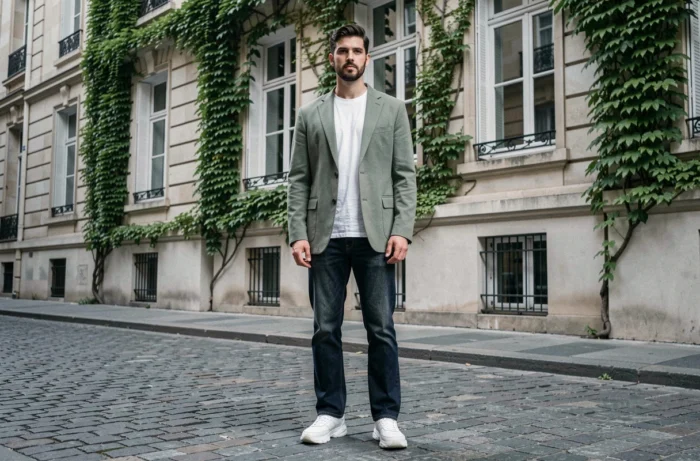
The structured wide trousers meet a simple expectation: comfort without visual slack. Defined waist, ample drape, clean lines. They work well with a fitted top or an oversized sweater.
Choosing a fabric with enough structure avoids the pajama effect. Thick linen, twill cotton, or a structured polyester-viscose blend hold their shape better throughout the day than a fabric that is too light.
European Textile Regulation: What Changes in Your Wardrobe
This is the angle that few fashion articles address, and it has direct consequences on store offerings. Starting July 19, 2026, large companies in the European Union can no longer destroy unsold clothing, accessories, and shoes, as part of the ESPR (Ecodesign for Sustainable Products Regulation).
In practical terms, this means that brands must clear their stock differently: promotions, donations, second-hand circuits. The end-of-season offering will mechanically evolve, with more pieces accessible through resale channels or organized clearance sales.
Other obligations will follow between 2026 and 2028:
- Stronger requirements on sustainability claims made by brands, to limit greenwashing on labels
- New labeling and traceability rules for materials, which will allow verification of the true origin of fibers
- Expanded producer responsibility for textiles, which will likely increase the production cost of disposable items
To refresh a wardrobe this season, this regulatory evolution has a practical effect: investing in durable pieces costs less in the medium term than accumulating low-lifespan clothing.
Second-Hand and Search Data: How Fashion Trends Are Created in 2026
The second-hand market in France is no longer a militant niche. It now represents a central market segment, driven by dedicated platforms and changing shopping habits.
What’s new in 2026 is how trends themselves are constructed. The Pinterest Predicts report, for example, deciphers upcoming pieces based on search volumes on social media. Trends emerge from user queries before being validated by fashion editorials.
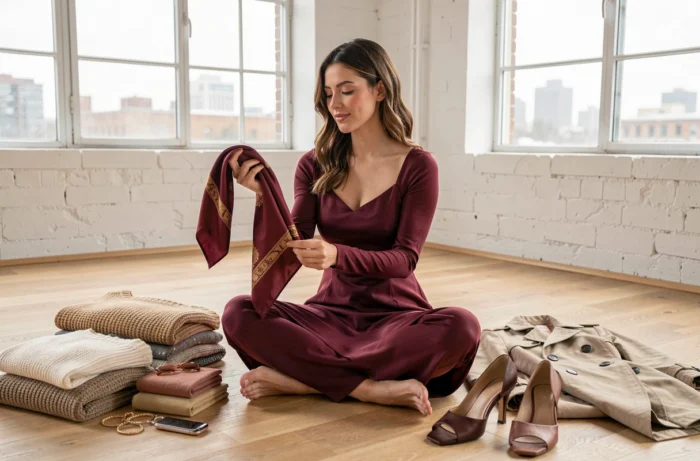
For the consumer, this changes the game. You can anticipate a trend by observing what is rising on visual search platforms, then find the corresponding piece second-hand before it peaks in price in stores. The long fluid dress, wide trousers, sporty-coded pieces: all these trends are already appearing in resale inventories.
Refreshing the wardrobe no longer requires a massive purchase at the beginning of the season. It is organized continuously, piece by piece, by cross-referencing trend signals with second-hand circuits and clearances related to new European obligations. Fashion in 2026 is read as much in data as on the runways.