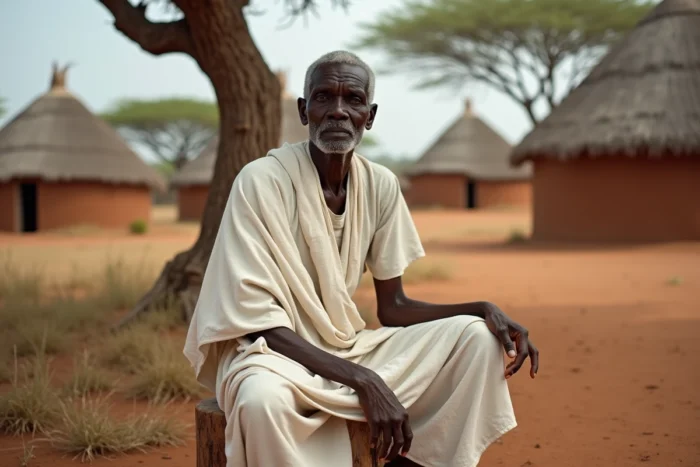
South Sudan is among the most closed destinations in the world. Koriom, a remote locality in Unity State, embodies the obstacles and peculiarities that make any immersion in this region as demanding as it is unpredictable. Uncertain logistical access, regional security instability, and the pastoral Nuer culture that is difficult to observe without local mediation: stepping foot in Koriom is less about an adventure trip and more about a rigorously prepared operation.
Climate and logistical constraints to reach Koriom
Koriom is located in the north of Unity State, amidst swampy plains that dictate the timing of all movements. During the rainy season, the tracks become impassable for long periods, cutting the area off from the rest of the country.
The journey from Bentiu, the state capital, can take more than half a day under the best conditions. No paved road leads to Koriom. Off-road vehicles remain the only land option, and their progress depends entirely on the state of the ground, which varies from week to week.
Adding to this difficulty is a phenomenon documented by several international organizations: the increasing water stress in the pastoral areas of South Sudan alters the movement patterns of communities and exacerbates tensions around access to water and grazing. For any outside visitor, this means that the practicable routes change according to the season, but also according to local transhumance dynamics.
The idea that Koriom is becoming a subject of exploration on Alternative Travel reflects a growing interest, but the on-the-ground reality demands that nothing be improvised.
Security in South Sudan: what the regional conflict changes for Koriom
The armed conflict that has been raging in Sudan (North) for several years does not stop at the border. A recent report submitted to the UNESCO World Heritage Committee highlights that this conflict disrupts humanitarian corridors, refugee flows, and logistical capacities throughout the region.
For Koriom, located near the Sudanese border, the consequences are direct. Transit routes and evacuation possibilities remain unpredictable. Humanitarian organizations present in Unity State continually adapt their routes, and any independent mission must contend with this instability.
Field reports diverge on this point: some specialized operators believe that rural areas far from combat zones remain relatively calm, while others report localized tensions related to population movements. The available data does not allow for generalizations, and each trip to Koriom requires an updated security assessment.
Applied crisis management standards in the field
In recent years, international crisis management standards have evolved. Protocols now include specific components for isolated environments and prolonged conflict zones. For a traveler or researcher considering Koriom, this translates into concrete requirements:
- A validated evacuation plan before departure, with identification of rallying points accessible even during the wet season
- Prior coordination with humanitarian actors present in Unity State to know the actual state of the tracks and local tensions
- A satellite communication device, as the mobile network is virtually non-existent in the Koriom area
Immersion in Nuer culture in Koriom: what can be observed and what remains closed
The population of Koriom is predominantly Nuer. Daily life revolves around cattle herding, which structures not only the economy but also social rites, marital alliances, and community hierarchy. Cattle occupy a central place in every aspect of Nuer life.
An outside visitor can observe herd movements, seasonal camps, and some aspects of community life. However, access to ritual ceremonies or collective decision-making spaces remains conditioned by the mediation of a recognized local interlocutor. Arriving without prior introduction closes most doors.
Limits of authenticity claimed by adventure tourism
The term “authentic adventure” deserves to be questioned in the context of Koriom. Authenticity cannot be decreed from a travel catalog. The Nuer communities are not meant to become a backdrop for visitors seeking extraordinary experiences.
The presence of foreigners in such an isolated area raises practical and ethical questions. What concrete benefit does the local community derive from a visit? Are interactions framed to avoid cultural misunderstandings? Do the produced contents (photos, videos, narratives) respect local sensitivities?
These questions do not have universal answers. They depend on how each immersion project is designed, negotiated, and conducted in the field.
Preparing for an immersion in Koriom: the real trade-offs
Considering a stay in Koriom requires making decisions on several points even before leaving one’s country of origin. The first concerns the legal framework: South Sudan requires a visa, and internal travel permits within Unity State are subject to variable procedures depending on the current security context.
- The exploitable climate window is limited to the dry season, which lasts a few months each year, during which the tracks remain passable
- Supplies of food, drinking water, and fuel must be entirely self-sufficient, as no commercial infrastructure exists on-site
- The logistical budget far exceeds that of a typical trip to East Africa, due to off-road transport, satellite equipment, and security coordination
Koriom cannot be improvised as a destination. Preparation often takes more time than the stay itself, and available feedback remains scarce. Each mission brings new data on accessibility, living conditions, and community dynamics, but none resemble the previous one.