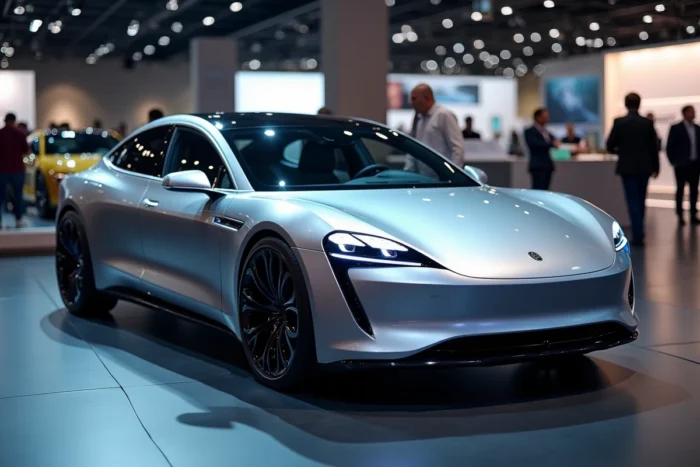
The share of new electric and plug-in hybrid cars sold in France reached 25.7% in 2024, down from 26.2% in 2023 according to the Service for Data and Statistical Studies (SDES). This slight decline contrasts with the prevailing discourse on the acceleration of the energy transition. What indicators are truly shaping the automotive market this year, and where are the real tipping points between powertrains, regulations, and purchasing behaviors?
New Powertrains in France in 2024: Market Shares Compared
The SDES data allows us to measure the actual evolution of each powertrain in new vehicle sales. The table below summarizes the most significant dynamics.
| Indicator | 2024 Trend | Context |
|---|---|---|
| Share of electric and plug-in hybrid vehicles (new) | 25.7% | Decline from 26.2% in 2023 |
| Circulation of petrol, gas, and electric vehicles | +7.6% | Increase driven by fleet renewal |
| Circulation of diesel vehicles | -4.7% | Structural decline confirmed year after year |
Diesel continues its decline with a circulation drop of -4.7% over the year. Petrol and electric powertrains capture most of the growth in the vehicle fleet.
The stagnation of the electric market share in new vehicles raises questions. The range of models has indeed expanded, and manufacturers have increased launches. The main barrier seems to lie in the entry price and the evolution of the ecological bonus, which has been tightened.
To follow these developments and other analyses related to the sector, a useful resource is: https://www.actu-auto-buzz.fr/, which aggregates news from the French automotive market.

Fleet Greening Quotas: An Underestimated Lever
The Mobility Orientation Law (LOM) imposes increasing targets for low-emission vehicles in company fleets. This mechanism profoundly transforms the B2B market, with a rarely discussed cascading effect.
Professional fleets are massively feeding the future market for used electric vehicles. Vehicles acquired today by companies to meet LOM quotas will be resold in two to four years. This flow will alter the structure of the second-hand market by injecting volumes of recent electric cars at more accessible prices.
Consequences for Individual Buyers
The gradual arrival of these used electric vehicles should reduce one of the main barriers to adoption: price. An individual who is hesitant to switch to electric today will soon find recent models with decent range on the second-hand market.
This B2B to B2C dynamic remains absent from most annual reports, which focus on new sales. However, it is an advanced indicator of the real democratization of electric vehicles in France.
Decline of Diesel and Redistribution of the European Vehicle Fleet
The structural decline of diesel is not limited to France. Several European countries are experiencing comparable declines, driven by the tightening of low-emission zones (LEZ) and the evolution of Euro standards.
In France, diesel circulation fell by 4.7% in 2024. This movement is accompanied by a reconfiguration of the fleet:
- Petrol vehicles absorb part of the shifts, particularly in urban segments and small engines
- Non-rechargeable hybrids are increasing in volume, often chosen as a transitional solution by drivers who are not yet ready to switch to fully electric
- Light diesel utility vehicles are holding up better than passenger cars, as electric alternatives remain limited in range and load capacity for certain professional uses
LEZ and Local Constraints
Low-emission zones, deployed in major urban areas, accelerate the withdrawal of the oldest diesels. For affected drivers, the choice is between a recent petrol vehicle, a hybrid, or an electric one, with decisions heavily dependent on budget and annual mileage.
Diesel remains relevant for high-mileage drivers outside urban areas, but its usage scope is shrinking each year due to the combined effects of LEZ and taxation.
Prices of New Cars in 2024: First Signs of Easing
After five years of continuous increases, the average price of new cars in France began to decline in 2024. This turnaround, noted by several market observers, reflects the end of post-Covid supply tensions and the return of more marked competition among manufacturers.
The competitive pressure from Chinese brands in the electric segment contributes to this price easing. Manufacturers like MG Motor and BYD offer models at significantly lower prices than those of historic European brands, forcing the latter to adjust their positioning.
Impact on Purchasing Decisions
The decline in new prices, combined with the upcoming arrival of used electric vehicles from fleets, alters the economic calculation for buyers. The total cost of ownership of an electric vehicle (purchase, energy, maintenance) is gradually approaching that of an equivalent thermal vehicle.
This price convergence, more than regulatory incentives, could be the real trigger for broader adoption of alternative powertrains in the coming years. The circulation and sales data for the first half of 2025 will help determine whether the observed stagnation in 2024 was merely a pause or a sign of a more durable ceiling on the electric market share in new vehicles.