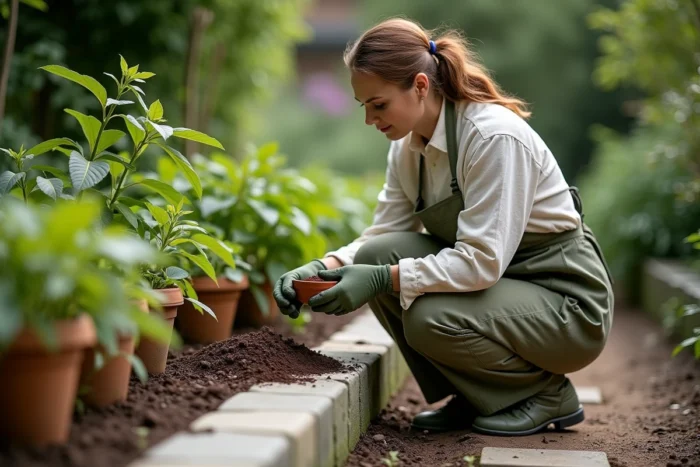
Coffee grounds are among the most commonly recommended natural repellents against small garden invertebrates. When applied to pillbugs, its effectiveness deserves to be examined in light of the actual behavior of these terrestrial crustaceans and the properties of the grounds themselves. This article compares the mechanisms at play and measures under what conditions coffee grounds can effectively alter the presence of pillbugs in a flowerbed or vegetable garden.
Pillbugs and moist organic matter: an underestimated attraction
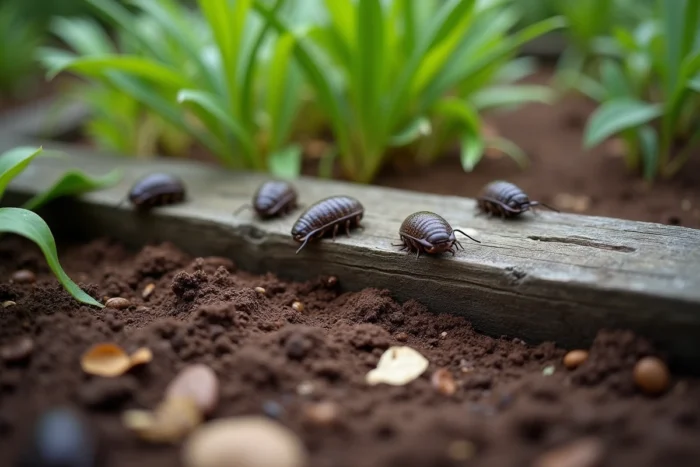
Pillbugs are not insects. They are terrestrial isopod crustaceans, classified among soil decomposers just like earthworms and springtails. Their role in the degradation of cellulose and lignin is documented by INRAE and Tela Botanica, who describe them as saprophagous invertebrates participating in soil structuring.
This status as an auxiliary has a direct consequence on the question of coffee grounds. Pillbugs actively seek out areas rich in organic matter and moisture. Freshly filtered coffee grounds are a very moist residue, rich in organic compounds. When laid in a thick layer at the base of plants, it can create exactly the microhabitat that pillbugs are looking for, which is the opposite of the desired effect.
Several guides on managing compost invertebrates indicate that pillbugs thrive where vegetable waste accumulates without being mixed with dry materials. Applying the grounds carelessly amounts to setting up a buffet rather than a barrier. This paradox explains the contradictory feedback from gardeners on the use of coffee grounds against pillbugs: some observe an effect, while others see a worsening.
Dry or wet coffee grounds: comparing effects on pillbugs
The distinction between dry and fresh grounds radically changes the situation. The table below summarizes the differences observed based on the state of the grounds at the time of application.
| Criteria | Fresh coffee grounds (wet) | Dry coffee grounds |
|---|---|---|
| Moisture content | High, promotes surface water retention | Low, grainy and crumbly texture |
| Attractiveness to pillbugs | High (moist and organic environment) | Low (dry surface, unwelcoming) |
| Residual odor | Strong, volatile compounds still present | More subtle, slow diffusion |
| Mold risk | High if thick layer | Low |
| Duration of action as a repellent | Several days before decomposition | Several weeks if not watered |
Dry coffee grounds retain some of their odoriferous compounds, notably caffeine, which acts as a disruptor on certain invertebrates. In contrast, fresh grounds lose this advantage as they decompose quickly and generate an environment conducive to mold, another food source for pillbugs.
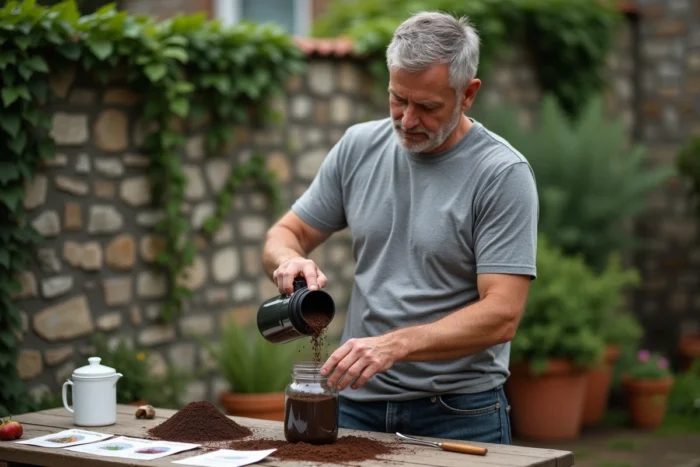
Drying the grounds before any application is the minimum condition to hope for a repellent effect. Spread in a thin layer on a tray, they dry in two to three days at room temperature, or in a few hours in a low-temperature oven.
Application conditions for coffee grounds in the garden against pillbugs
Even when dry, coffee grounds do not constitute a physical barrier comparable to diatomaceous earth or wood ash. Their action relies on odor and grainy texture, two factors that rain quickly neutralizes.
Where and how to place the grounds
- In a thin circle around the bases of targeted vegetables or plants, on previously weeded and dried soil. The thickness should not exceed half a centimeter to avoid trapping moisture
- Along the edges of the vegetable garden or greenhouse thresholds, common transit areas for pillbugs between moist spaces and crops
- Mixed in equal parts with untreated wood ash, which enhances the drying effect and creates a doubly inhospitable surface for crustaceans that breathe through pseudo-gills requiring moisture
After each rainy episode, the grounds must be renewed. This is the main constraint of this method: regular maintenance conditions any effectiveness.
Precautions for soil and plants
Coffee grounds contain nitrogen, potassium, and magnesium, making them a light amendment. When applied in reasonable amounts, they do not significantly alter the soil pH, contrary to common belief. However, excessive accumulation over several months can promote undesirable surface fungi.
Acidophilic plants (hydrangeas, blueberries, rhododendrons) tolerate the grounds well as light mulch. For vegetable garden crops, caution dictates incorporating them into the soil or compost rather than leaving them on the surface, unless the goal is specifically to create a temporary barrier against pillbugs.
Should we really keep pillbugs away from the garden?
Before multiplying applications of grounds, one question deserves to be asked: does the presence of pillbugs really pose a problem? In the vast majority of cases, pillbugs do not attack living plants. They consume decomposing organic matter, dead leaves, and damp wood.
The damage attributed to pillbugs on young seedlings or strawberries touching the ground often results from confusion with slugs or a situation where the plants are directly in contact with very moist mulch. Elevating fragile fruits and clearing the collar of seedlings reduces these interactions without requiring a repellent.
Recent syntheses on soil fauna classify pillbugs among the decomposers actively participating in the nutrient cycle. Systematically keeping them away amounts to depriving oneself of a useful link in the chain of organic matter degradation, the very process that nourishes the soil of the vegetable garden.
Dry coffee grounds, applied in a thin layer and renewed after rain, can reduce the presence of pillbugs in a specific area. It is a method of local management, not eradication. For gardeners who observe real damage to fragile seedlings, combining dry grounds with wood ash and dry mulch is the most coherent approach. For all others, tolerating pillbugs remains the most beneficial strategy for the soil.